Cadiz — Spanish Naval Port
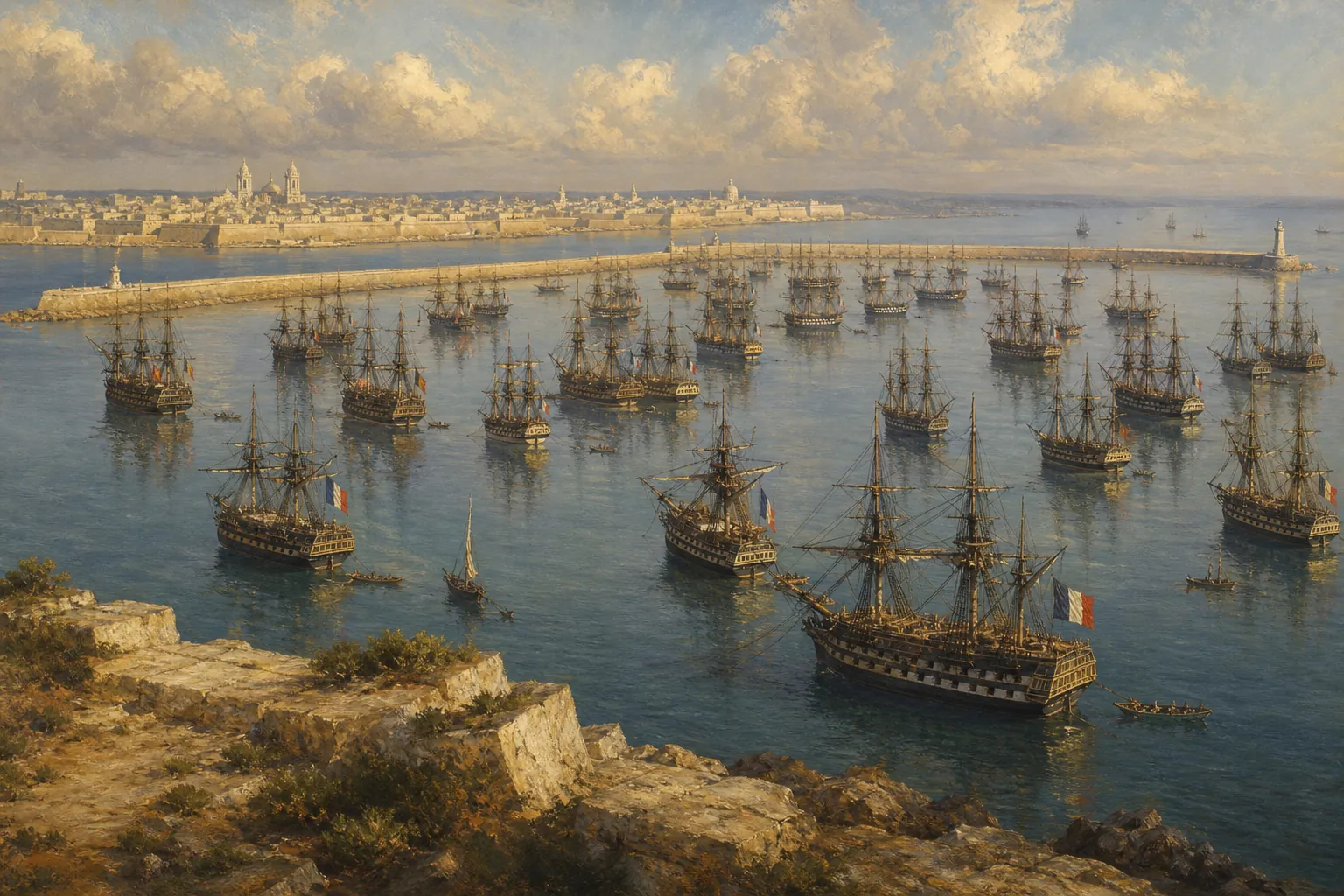 Generated illustration. Not a historical photograph. A fleet of the line at anchor. Not a photograph of Cadiz.
Overview
Cadiz is the Spanish naval port already running through the filled 1797 and 1805 notes. After the Battle of Cape St Vincent 1797 — Overview the surviving Spanish fleet fled here and was blockaded. In 1805 it is the Combined Fleet’s base in the Trafalgar Campaign 1805, and the nearest enemy harbour during the Storm After Trafalgar — 24–29 October 1805.1
In 1797 and 1805
This note covers those two already-sourced uses. Dockyard plant, founding, and a full blockade journal stay on RESEARCH_QUEUE and on the unused roadmap title Cadiz Roads — Blockade Conditions and Anchorage Hazards.
On 14 February 1797 the Spanish remainder escaped to Cadiz after Jervis and Nelson in HMS Captain — 74-gun Third Rate took four ships. The Cape St Vincent note already says the port was then blockaded for two years.2
In 1805 Villeneuve Pierre-Charles — French Admiral joined Gravina Federico — Spanish Admiral here, recrossed from the Atlantic after Battle of Cape Finisterre 1805, and was blockaded by Nelson Horatio — Biography Overview. He sortied on 19 October 1805 under pressure from Decrès Denis — French Naval Minister and the expected arrival of Rosily-Mesros François-Étienne — French Admiral. The Battle of Trafalgar 1805 — Overview was fought the next day off Cape Trafalgar — Geography. The storm drove prizes toward this lee-shore harbour.3
Sources
- @knight2005pursuit — pp. 211–230 (St Vincent destination); pp. 480–572 (1805 campaign)
- @adkin2005trafalgar — 1805 companion already used at pp. 250–323
- @white2005nelson
- Battle of Cape St Vincent 1797 — Overview
- Trafalgar Campaign 1805
- Storm After Trafalgar — 24–29 October 1805
Related
Navigation
- MOC_Geography_Places
- Ports_Harbours_Index — first primary note in an empty ports room
Same Campaigns
- Trafalgar Campaign 1805
- Battle of Trafalgar 1805 — Overview
- Battle of Cape Finisterre 1805
- Battle of Cape St Vincent 1797 — Overview
- Storm After Trafalgar — 24–29 October 1805
Key People
- Villeneuve Pierre-Charles — French Admiral
- Gravina Federico — Spanish Admiral
- Decrès Denis — French Naval Minister
- Nelson Horatio — Biography Overview
Cross-Domain
Footnotes
-
Destination after St Vincent, 1805 Combined Fleet base, storm’s nearest enemy harbour: already on those three sourced notes. ↩
-
Two-year blockade after 14 February 1797: Battle of Cape St Vincent 1797 — Overview. ↩
-
Junction, Finisterre return, 19 October sortie, storm: Trafalgar Campaign 1805, Villeneuve Pierre-Charles — French Admiral, Storm After Trafalgar — 24–29 October 1805. Do not add a dock count or a founding year until a page is licensed. ↩