Hyde Parker — British Admiral
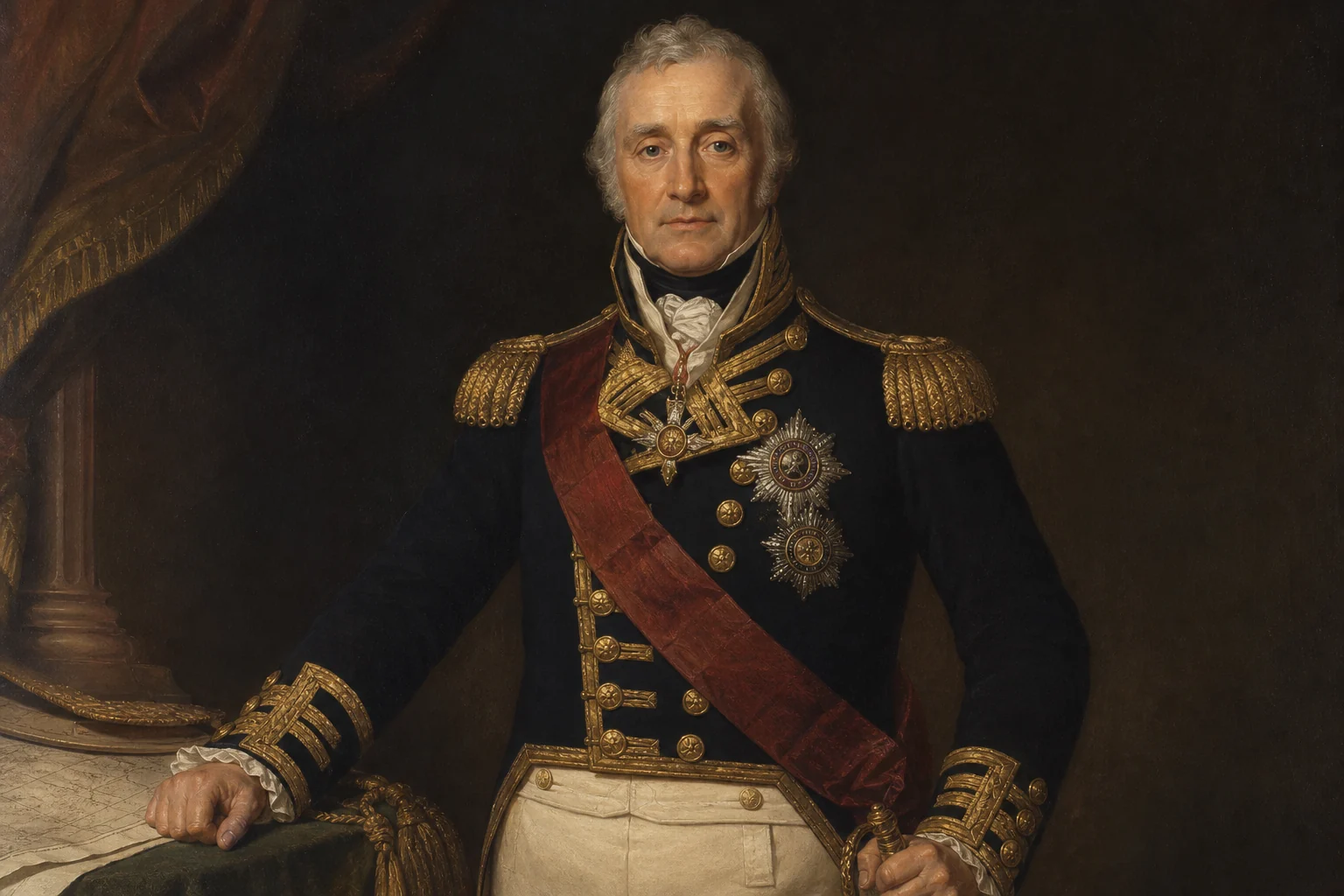 Generated portrait. Not a historical photograph.
Overview
Hyde Parker commanded the British Baltic fleet at the Battle of Copenhagen 1801 — Overview on 2 April 1801. Nelson Horatio — Biography Overview was his second-in-command. Knight’s Copenhagen chapter (pp. 374–408) is the vault’s scholarly spine for that day — Hyde Parker’s command, Signal 39, and the truce.1
Career and Key Roles
This note covers 2 April 1801, not a full life. Birth, earlier commands, and later years are not on a licensed page here — they stay on RESEARCH_QUEUE.
Parker flew his flag in HMS London and kept distant. Nelson transferred into HMS Elephant — 74-gun Third Rate for the inshore channel off Copenhagen — Denmark. Around 1pm Parker hoisted Signal No. 39 — discontinue the action — as a permissive order. Nelson kept Signal 16 flying. The exact wording of the “blind eye” speech is already marked contested on the battle note.2
Key Decisions and Actions
After the Danish line was largely silenced Nelson sent a flag of truce ashore. The armistice that followed broke the Armed Neutrality of the North. The battle overview already records that Parker was recalled and never held active command again.3
Sources
- @knight2005pursuit — pp. 374–408
- @white2005nelson
- @adkin2005trafalgar
- Battle of Copenhagen 1801 — Overview
Related
Navigation
Discovered From
Same Battle
- Nelson Horatio — Biography Overview
- Hardy Thomas Masterman — Captain HMS Victory — soundings on 1 April
- Fischer Olfert — Danish Commodore — still a stub
- HMS Elephant — 74-gun Third Rate
- Copenhagen — Denmark
Cross-Domain
Footnotes
-
@knight2005pursuit Key Claims: pp. 374–408, Copenhagen (Hyde Parker’s command, Signal 39, the truce). ↩
-
London distant, Elephant, Signal 39 as permissive, Signal 16, contested wording: Battle of Copenhagen 1801 — Overview. ↩
-
Recall: same battle note. Do not add life dates until a page is licensed. ↩