Battle of Trafalgar 1805 — Overview
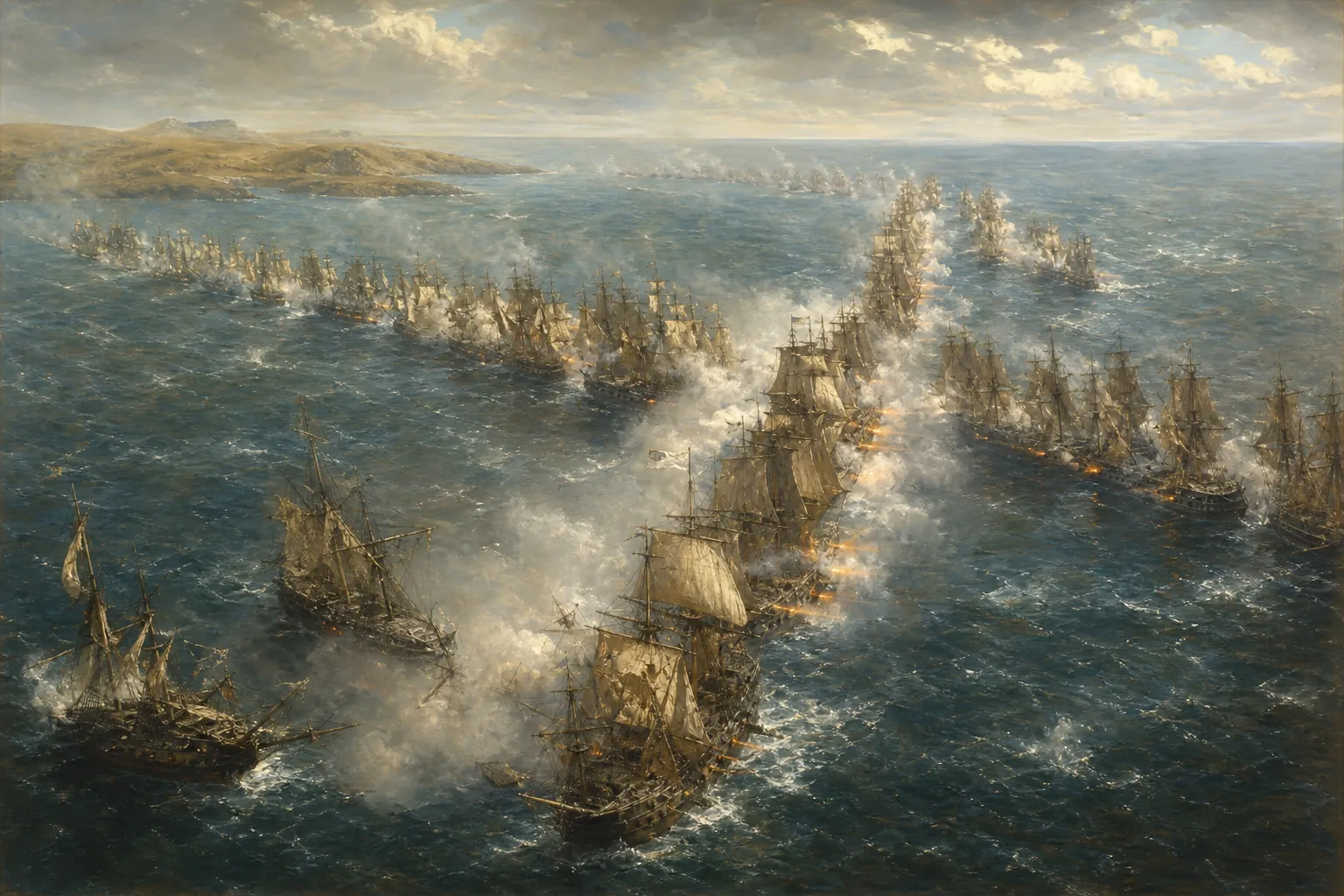 Generated illustration. Not a historical photograph. Two British columns cutting the Combined line, 21 October 1805.
Overview
On 21 October 1805, Nelson Horatio — Biography Overview led 27 British ships of the line against a combined Franco-Spanish fleet of 33 ships off Cape Trafalgar — Geography. Nelson attacked in two columns, breaking the enemy line and destroying their ability to manoeuvre as a fleet. Twenty-two enemy ships were captured or sunk. Nelson was shot by a marksman and died before the battle ended. It was the most decisive naval engagement of the Age of Sail.
Background and Causes
Napoleon’s grand strategy required control of the English Channel to invade Britain. Villeneuve Pierre-Charles — French Admiral commanded the combined fleet, under orders to lure the Royal Navy — Institutional Overview away from the Channel. After months of evasion across the Atlantic and back, Villeneuve was blockaded in Cadiz — Spanish Naval Port by a British fleet under Nelson. On 19 October 1805, Villeneuve sortied under pressure from Napoleon.
Forces Involved
British Fleet — 27 ships of the line, commanded by Vice Admiral Nelson aboard HMS Victory — Overview
- Weather column: 12 ships led by Nelson in HMS Victory — Overview
- Lee column: 15 ships led by Vice Admiral Collingwood Cuthbert — Biography in HMS Royal Sovereign — Overview
Franco-Spanish Fleet — 33 ships of the line, commanded by Villeneuve in Bucentaure — Overview
- French ships: 18, including Bucentaure — Overview (flagship) and Redoutable — French 74-gun Ship
- Spanish ships: 15, including Santísima Trinidad — Spanish First Rate (the largest warship in the world)
Course of Events
Nelson’s approach was audacious and unprecedented. Rather than forming a parallel line of battle, he attacked perpendicular to the enemy line in two columns — cutting through it at two points simultaneously, isolating the van and preventing it from supporting the centre and rear.
At approximately 11:45 am, Nelson ordered his famous signal: England Expects Signal — Trafalgar 1805. The signal flags read: “England expects that every man will do his duty.”
The British broke the enemy line at around noon. HMS Royal Sovereign — Overview was first into action. Ferocious close-range fighting followed — ships locked together firing at point-blank range, boarding parties, grenades thrown through gunports.
At approximately 1:15 pm, a French marksman aboard Redoutable — French 74-gun Ship shot Nelson from the mizzentop at a range of approximately 50 feet. The ball entered his left shoulder, passed through his lung, and lodged in his spine. He died at 4:30 pm.
Outcome and Casualties
British: 449 killed, 1,241 wounded. No ships lost. Franco-Spanish: approximately 4,400 killed, 2,500 wounded. 22 ships captured (though the Storm After Trafalgar — 24–29 October 1805 destroyed many of the prizes).
Strategic Consequences
Trafalgar ended Napoleon’s ambitions to invade Britain. The Royal Navy — Institutional Overview would not face a serious challenge to its dominance for over a century. Nelson’s death transformed him from admiral to national saint — the mythology of his sacrifice became a cornerstone of British national identity.
Sources
Related
Navigation
Same Campaign
- Trafalgar Campaign 1805 — Atlantic feint, Finisterre, Cadiz, 21 October
- Battle of Cape Finisterre 1805 — 22 July prelude
- Storm After Trafalgar — 24–29 October 1805 — why almost no prizes reached Gibraltar
Same Battle — Sub-Notes
- Battle of Trafalgar 1805 — Order of Battle British Fleet
- Battle of Trafalgar 1805 — Order of Battle Franco-Spanish Fleet
- Battle of Trafalgar 1805 — Death of Nelson
- England Expects Signal — Trafalgar 1805
- Nelson’s Prayer Before Trafalgar — Text, Context, and Providential Belief — night before, 20–21 October
Key People
- Nelson Horatio — Biography Overview
- Collingwood Cuthbert — Biography
- Villeneuve Pierre-Charles — French Admiral
- Gravina Federico — Spanish Admiral
- Decrès Denis — French Naval Minister
- Hardy Thomas Masterman — Captain HMS Victory
Key Ships
- HMS Victory — Overview
- HMS Royal Sovereign — Overview
- Bucentaure — Overview
- Redoutable — French 74-gun Ship
- Santísima Trinidad — Spanish First Rate
- Príncipe de Asturias — Spanish First Rate
Cross-Domain
- Cape Trafalgar — Geography
- Royal Navy — Institutional Overview
- Cadiz — Spanish Naval Port
- Line of Battle — Naval Tactic — the formation the two columns broke
- Nelson’s Column — London