Royal Navy — Institutional Overview
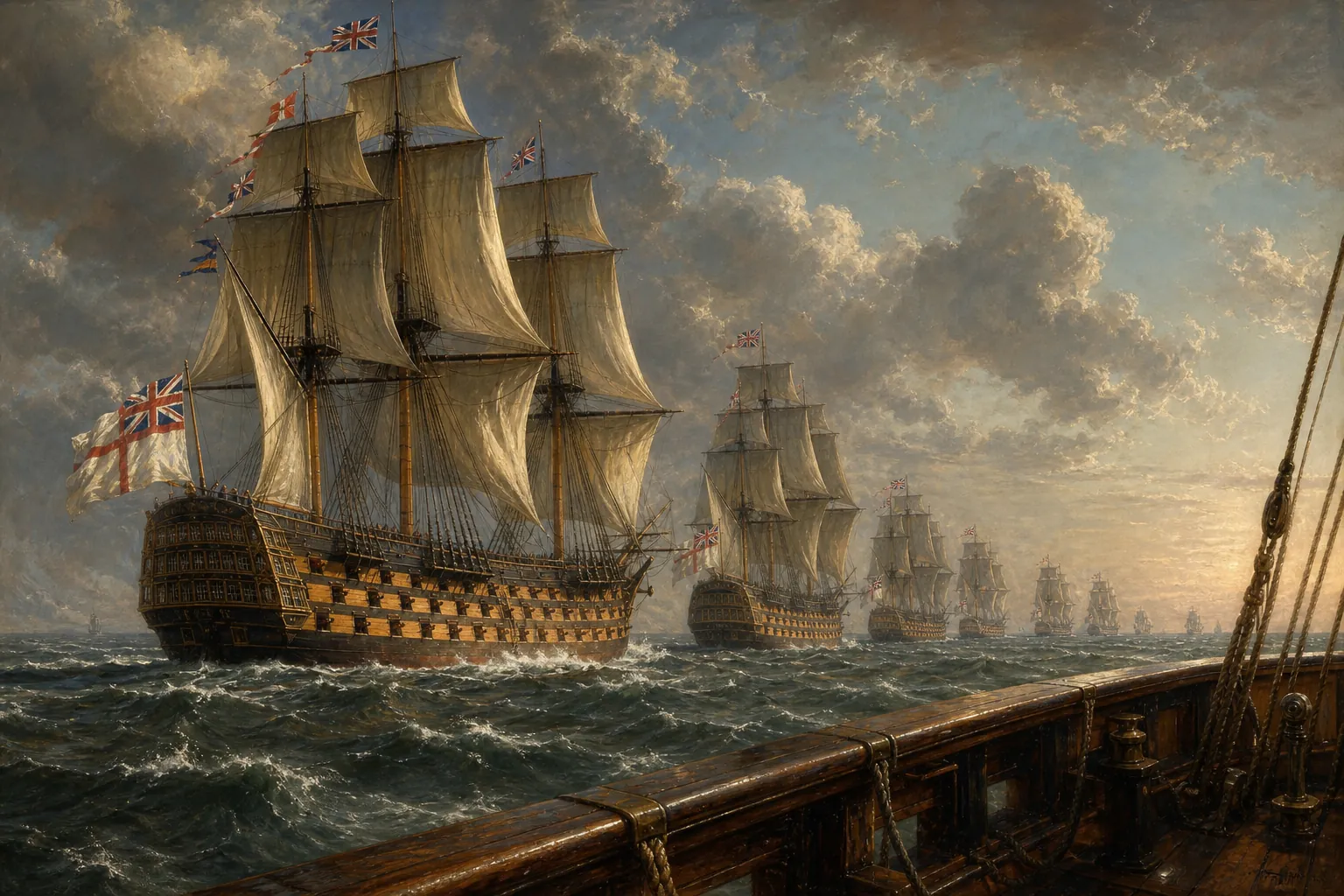 Generated illustration. Not a historical photograph. A sailing fleet. Not a likeness.
Claim
The Royal Navy in 1805 was the world’s largest and most powerful naval force — over 900 ships in various states of commission, approximately 120,000 men, and an administrative and industrial infrastructure without parallel in history.
Reasoning
Britain’s security depended on naval supremacy. An island nation with a global empire could not defend its trade, colonies, or home shores without mastery of the sea. The Navy was not merely a military instrument — it was the instrument of British foreign policy, commercial power, and national survival.
Evidence
The Navy was administered through the Board of Admiralty in London, with operational authority exercised through Naval Commands — Structure. The industrial base comprised: Portsmouth Dockyard, Chatham Dockyard, Devonport Dockyard, Woolwich Dockyard, and Deptford Dockyard — the largest industrial enterprises in Britain.
Manning was a perpetual crisis. Volunteers never sufficed. The Press Gang — Naval Impressment System forcibly conscripted merchant seamen and landsmen. In wartime, the Navy absorbed men from every corner of the Atlantic world — British, Irish, American, Caribbean, African, and European sailors all served in the same ship’s company.
The officer corps was strictly hierarchical: Naval Ranks — Royal Navy Structure. Promotion to post-captain secured a place on the seniority list — from there, promotion to admiral was automatic if you lived long enough. This created the paradox of brilliant men like Nelson Horatio — Biography Overview and mediocre ones advancing at the same rate.
Counterpoints
The Navy’s logistical and administrative genius is often understated relative to its tactical achievements. Historians Roger Knight and Nicholas Rodger have argued the real story of British naval power is the victualling board, the sick and hurt board, and the ordnance board — not the admirals.
Sources
Related
Navigation
Related Notes
- Board of Admiralty — Structure and Function
- Press Gang — Naval Impressment System
- Naval Ranks — Royal Navy Structure