Nelson Horatio — Biography Overview
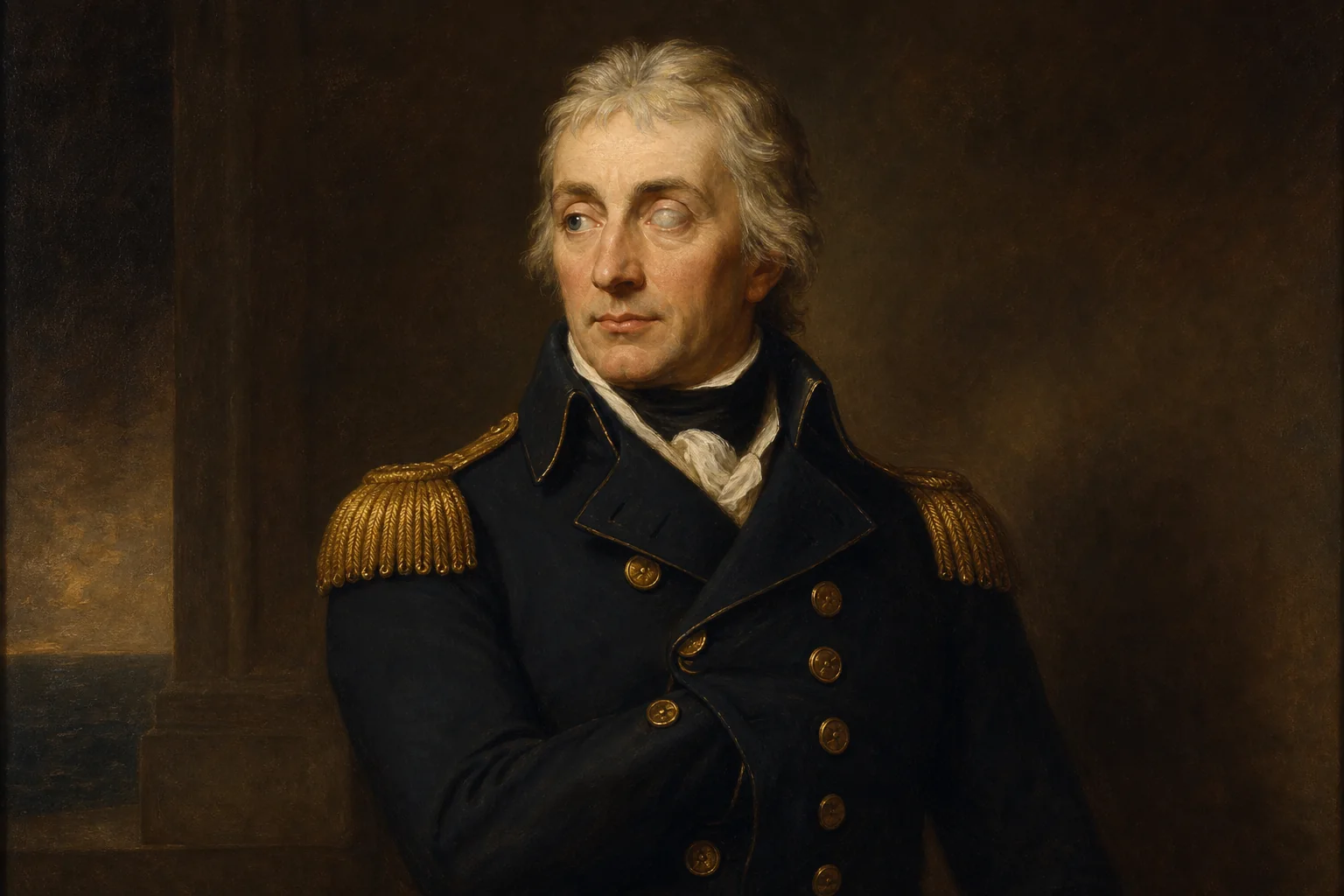 Generated portrait. Not a historical photograph.
Overview
Horatio Nelson (1758–1805) was Britain’s greatest naval commander — a tactical revolutionary who won his country’s most decisive naval victories, lost an eye and an arm in battle, and died at the moment of his greatest triumph at Battle of Trafalgar 1805 — Overview. His methods, his leadership, and his myth reshaped the Royal Navy — Institutional Overview and the public understanding of what a naval hero could be.
Early Life
Born 29 September 1758 at Burnham Thorpe — Norfolk Village to a Norfolk clergyman. His mother died when he was nine. He entered the Navy at twelve through his maternal uncle, Captain Maurice Suckling. Sickly, small, and determined — he contracted malaria in the Caribbean, suffered debilitating seasickness throughout his career, and kept fighting.
Career and Key Roles
Nelson rose through every rank on merit and audacity. His career includes:
- Midshipman 1771, aged 12
- Captain 1779, aged 20 — youngest post-captain in the Navy
- Battle of Cape St Vincent 1797 — broke formation without orders, captured two ships
- Nelson — Loss of Eye at Calvi 1794 — blinded in right eye by flying debris
- Nelson — Loss of Arm at Tenerife 1797 — arm amputated after grapeshot wound
- Battle of the Nile 1798 — destroyed the French fleet at anchor, stranded Napoleon in Egypt
- Battle of Copenhagen 1801 — “turned a blind eye” to the signal to withdraw
- Battle of Trafalgar 1805 — Overview — destroyed the Franco-Spanish fleet; died aboard HMS Victory — Overview
Command Style and Leadership
Nelson’s genius was human as much as tactical. He briefed his captains in detail before battle — the “Nelson’s Touch — Command Philosophy” — so they understood his intent and could act without orders. He inspired fanatical loyalty. His officers called themselves the Band of Brothers — Nelson’s Captains.
Personal Life
Nelson’s marriage to Frances Nelson — Biography deteriorated publicly. His affair with Hamilton Emma — Biography scandalised London society and fascinated the press. He fathered one daughter, Horatia Nelson — Biography, with Emma. His personal life fed the propaganda machine as much as his battles did.
Physical Description
Five feet six inches. Slight build. Wore his decorations into battle — the ornate stars on his coat at Trafalgar may have made him a visible target for the French sniper who killed him.
Legacy
Nelson died at 4:30 pm on 21 October 1805, three hours after being shot by a marksman aboard the French ship Redoutable — French 74-gun Ship. His body was preserved in a barrel of brandy and brought home to a state funeral. Trafalgar Square — London and Nelson’s Column — London were built in his memory. He became the most mythologized figure in British military history.
Sources
Related
Navigation
Same Subject — Nelson Notes
- Nelson — Loss of Eye at Calvi 1794
- Nelson — Loss of Arm at Tenerife 1797
- Nelson — Command Style and Leadership
- North Walsham — Chatham Stage
- San Bartolomeo — Boarded Barefoot
- Boreas Mast-Head — Midshipmen
- Boreas French Frigate Escort — Nevis
- Island Colours — Four Americans Nevis
- Register Act — Boreas Memorial
- Boreas Nore Slop Ship
- Agamemnon 345 Men — Sardinia Chase
- Albemarle Fishing Schooner — Boston Bay
- Deux-Ponts Launch — Puerto Cabello
- Fort Charles — Port Royal 1779
- Carcass Cutter — Walrus Attack
- San Juan Expedition — 1800 Sent
- Antigua Contractor Frauds
- Fiorenzo Flour Mill — 21 January 1794
- Centuri Four Polaccas — 6 February 1794
- Vanguard Six Colours — Aboukir
- Copenhagen Good Friday — 953
- Calvi Sick-List — 150 in Beds
- Vanguard Four-Day Refit — St Pietro
- Calvi Lion Sun — Half Sick
Key Battles
- Battle of Trafalgar 1805 — Overview
- Battle of the Nile 1798 — Overview
- Battle of Cape St Vincent 1797 — Overview