Cape St Vincent Squalls — 14 February 1797
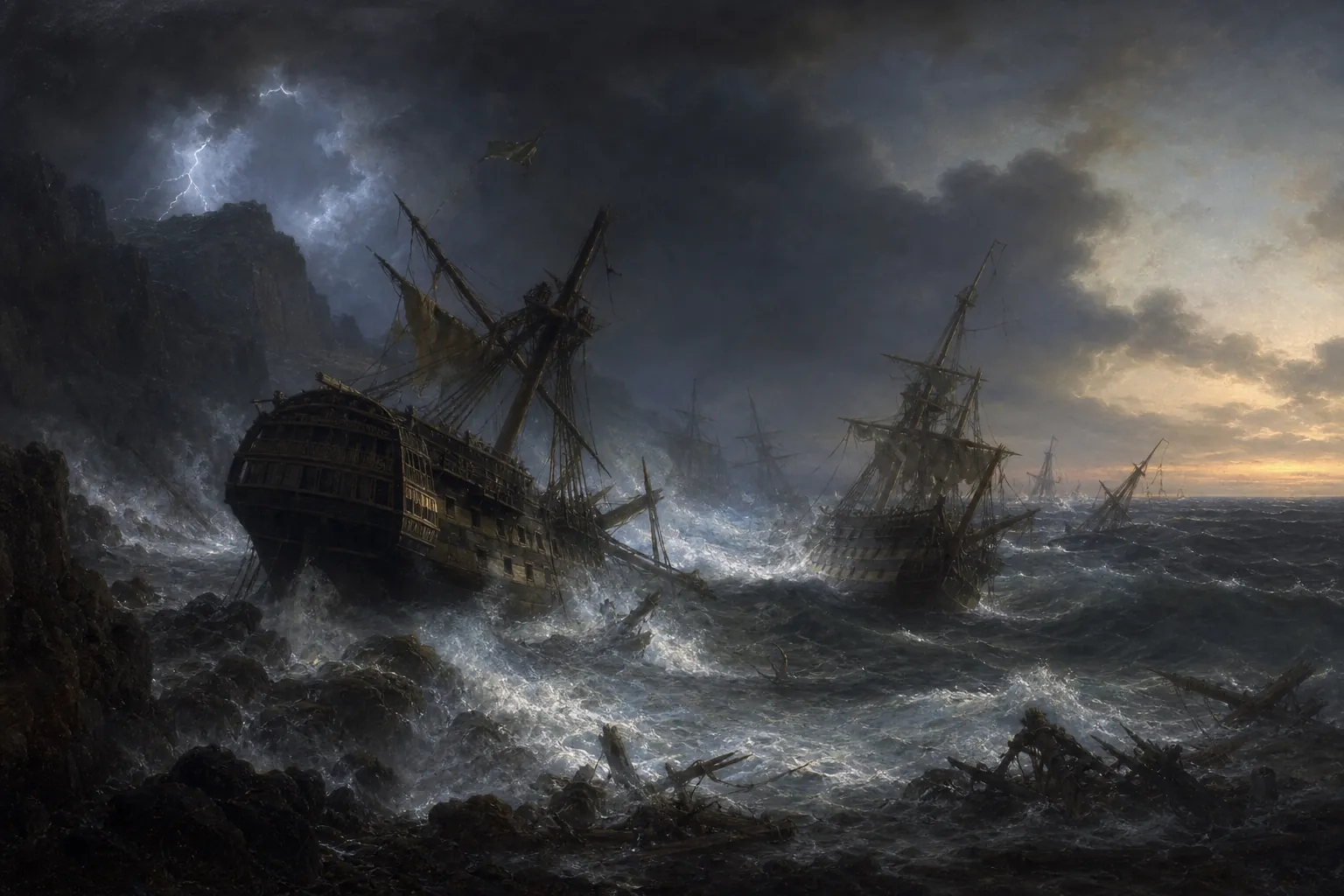 Generated illustration. Not a historical photograph. A squally sea. Not a later gale and not a likeness.
Overview
The weather is already on the Battle of Cape St Vincent 1797 — Overview. Squally weather had separated the Spanish into two divisions — 18 in the lee group, 9 to windward.1
The Weather
This note covers that squally separation only. A later gale, a wind table, and a force list stay on RESEARCH_QUEUE.
Jervis Signal — Drive Between 11am 1797 already uses the 11am drive-between hoist through that gap. Cape St Vincent — Geography already uses the location. Do not invent a wind force or a later storm from this page.2
Sources
- @knight2005pursuit
- @white2005nelson
- @hughes1957collingwood
- @adkin2005trafalgar
- Battle of Cape St Vincent 1797 — Overview
Related
Navigation
Same Subject
- Battle of Cape St Vincent 1797 — Overview
- Cape St Vincent — Geography
- Jervis Signal — Drive Between 11am 1797
- Finisterre Fog — 22 July 1805
Cross-Domain
- Storm After Trafalgar — 24–29 October 1805
- Age of Sail — Era Overview
- Age of Sail — Chronological Timeline
Footnotes
-
Squally weather had separated the Spanish into two divisions — 18 in the lee group, 9 to windward: Battle of Cape St Vincent 1797 — Overview. ↩
-
11am hoist stays on Jervis Signal — Drive Between 11am 1797. Location stays on Cape St Vincent — Geography. Do not invent a wind force, a later gale, or a force list. ↩