Wooden Splinters — Naval Wound Type
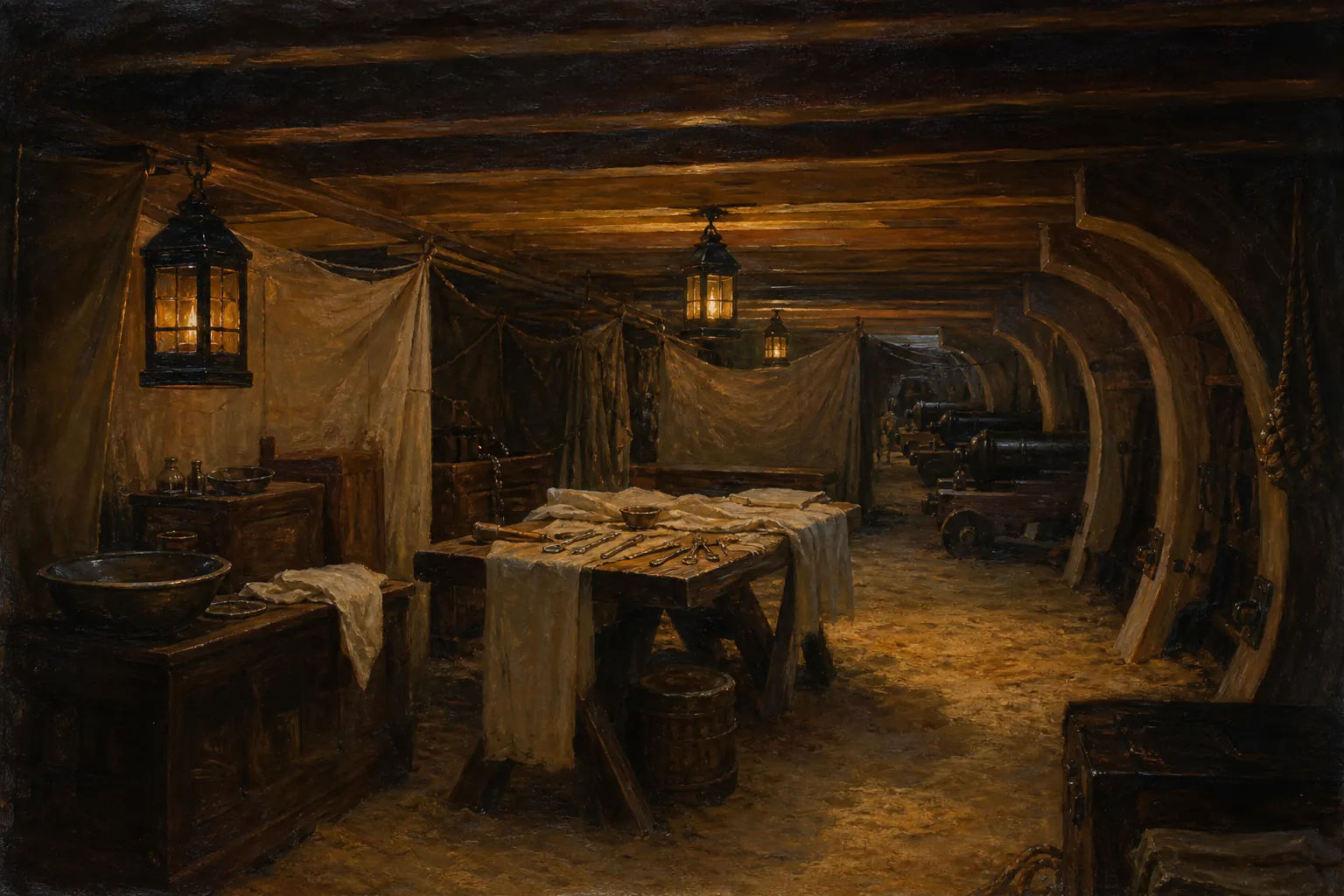 Generated illustration. Not a historical photograph. An orlop cockpit. The image is a wound-care setting, not a named splinter portrait.
Overview
The wound type is already on 32-Pounder Naval Cannon. At 50–100 yards a 32-pound iron ball could pass through the entire width of a ship’s hull, turning oak and crew members into lethal splinters.1
The Sentence
This note covers that wound type only. Surgery for splinters, and any statistic beyond the sentence already on the 32-pounder note, stay on RESEARCH_QUEUE.
More men were killed by wooden splinters than by the balls themselves. The gun that produced that effect sat on a Naval Gun Carriage — Truck Carriage.2
Sources
Related
Navigation
Same Subject
- 32-Pounder Naval Cannon
- Naval Gun Carriage — Truck Carriage
- HMS Victory — Overview
- First Rate Ship of the Line — Class Overview
Cross-Domain
Footnotes
-
At 50–100 yards a 32-pound iron ball could pass through the entire width of a ship’s hull, turning oak and crew into lethal splinters: 32-Pounder Naval Cannon. ↩
-
More men killed by wooden splinters than by the balls themselves: same note. Do not invent surgery for splinters or further statistics. ↩