Carcass Cutter — Walrus Attack
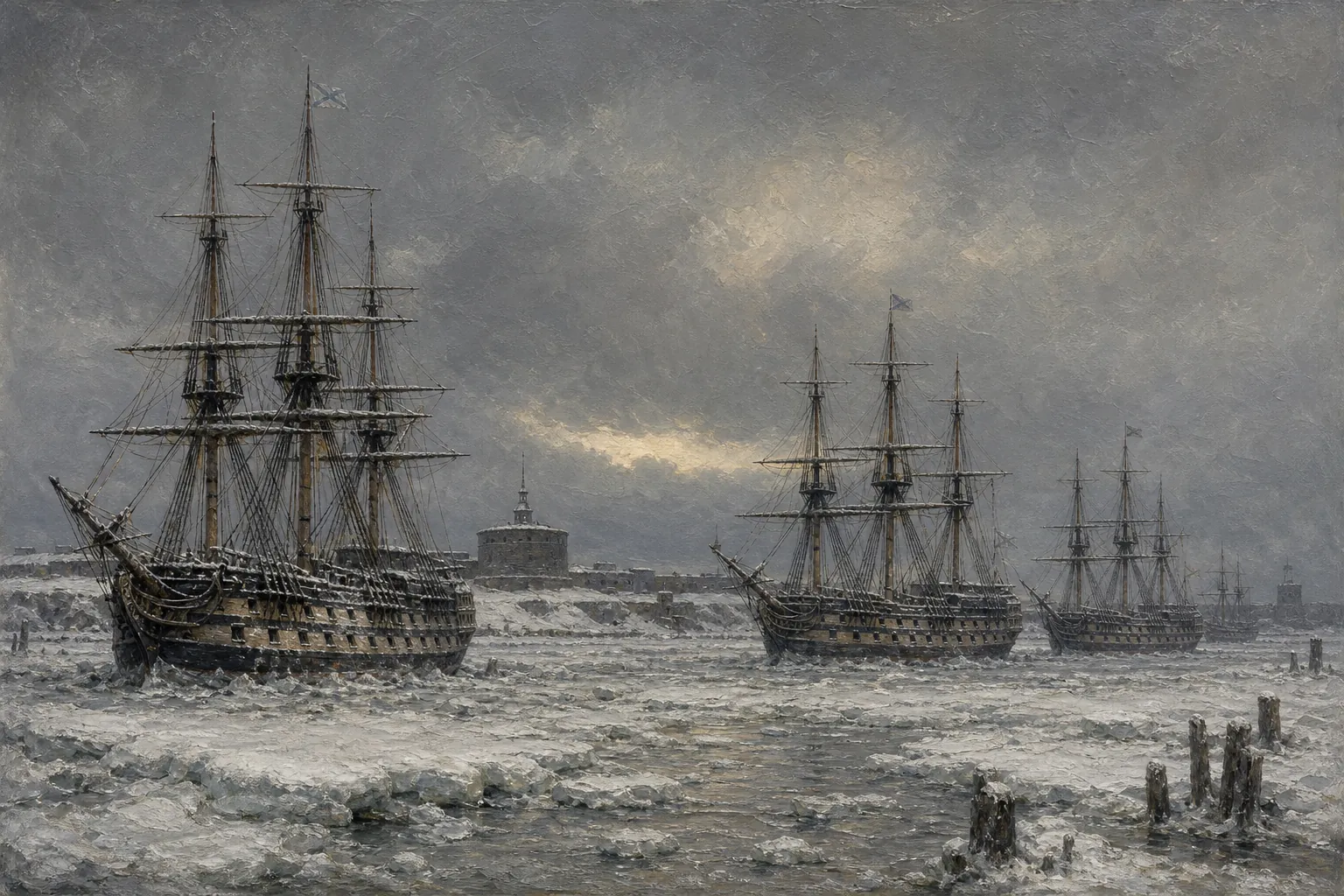 Generated illustration. Not a historical photograph. Ice at sea. Not a portrait.
Overview
Carcass Coxswain — Phipps Arctic Voyage 1773 already records the coxswain posting. Irving Wet-Mop Still — Phipps Arctic 1773 already records the still. This note covers the walrus boat only.1
The Rescue
Southey says that, young as he was, Nelson was appointed to command one of the boats sent out to explore a passage into the open water. That boat was the means of saving a boat belonging to the Racehorse. Some of the officers had fired at and wounded a walrus. The wounded animal dived immediately and brought up a number of its companions; they all joined in an attack upon the boat, wrested an oar from one of the men, and it was with the utmost difficulty that the crew could prevent them from staving or upsetting her, till the Carcass’s boat came up. The walruses, finding their enemies thus reinforced, dispersed.2
The coxswain posting stays on Carcass Coxswain — Phipps Arctic Voyage 1773. The still stays on Irving Wet-Mop Still — Phipps Arctic 1773. The polar-bear set-piece stays off this page. This page does not invent a boat-rate or a later cutter career.
Sources
Related
Navigation
Same Subject
- Carcass Coxswain — Phipps Arctic Voyage 1773
- Irving Wet-Mop Still — Phipps Arctic 1773
- Nelson Horatio — Biography Overview
Cross-Domain
Footnotes
-
Coxswain posting only: Carcass Coxswain — Phipps Arctic Voyage 1773. Still only: Irving Wet-Mop Still — Phipps Arctic 1773. ↩
-
Appointed to command one of the boats sent to explore a passage; saved a Racehorse boat; officers had fired at and wounded a walrus; the wounded animal brought up companions that joined an attack, wrested an oar, and nearly stove or upset the boat till the Carcass’s boat came up. @southey1813nelson vol. 1, p. 15 (1813). Do not add the polar-bear set-piece on this page. ↩