Cities Regions Index
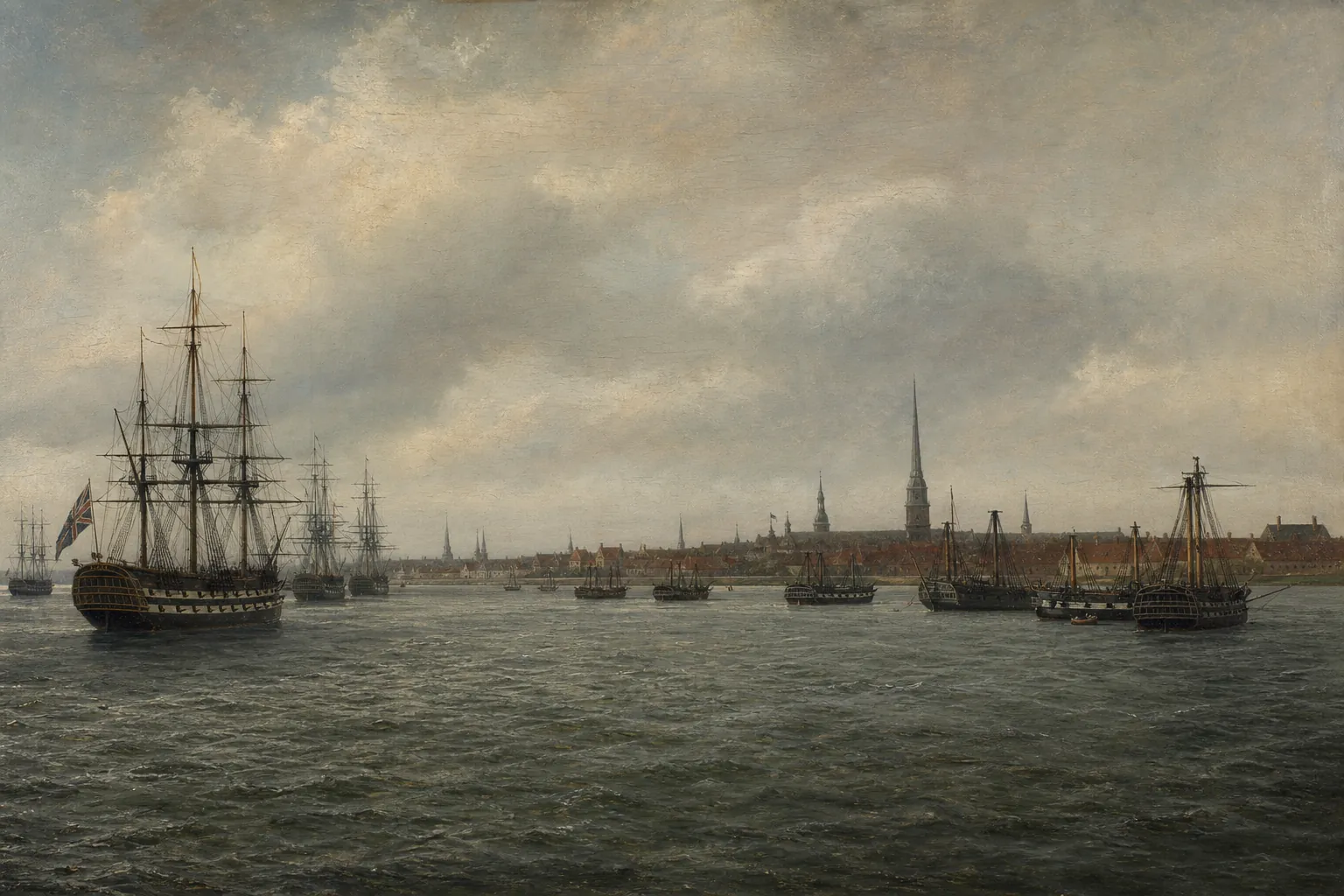 Generated illustration. Not a historical photograph. A northern capital across an anchorage.
Hub
Cities and regions — the urban centres and the territorial hinterlands around them — are foundational units of historical analysis, simultaneously stages, actors, and prizes. The subdomain covers cities and regions as a research domain across every era and civilisation: the early urban centres of Mesopotamia (Uruk, Ur, Babylon, Nineveh); ancient Egyptian Memphis and Thebes; the Indus Valley’s Mohenjo-daro and Harappa; the Shang and Zhou capitals of early China; classical Athens, Sparta, Carthage, Rome, and Alexandria; the great medieval metropolises of Constantinople, Baghdad, Cordoba, Chang’an, Kaifeng, Cairo, and Venice; the pre-Columbian capitals of Tenochtitlan, Cuzco, and Cahokia; early-modern hubs like Istanbul, Beijing, Edo, Delhi, Madrid, Antwerp, Amsterdam, and Lisbon; the imperial capitals of London, Paris, St Petersburg, and Vienna; the industrial cities of Manchester, Chicago, Osaka, and the Ruhr; the global megacities of the twentieth and twenty-first centuries (Tokyo, Shanghai, Lagos, Mumbai, São Paulo, Mexico City); and the regional formations (Tuscany, the Hanseatic League, the Spice Islands, the American South, the Pearl River Delta) that shaped without quite being states. Notes treat cities as built environments, demographic and economic engines, political actors, cultural producers, and military objectives. The Mediterranean ports the current vault focus encounters (Naples, Alexandria, Lisbon, Copenhagen) are particular cases within this much broader urban history. Adjacent to MOC_Geography_Places, MOC_States_Empires, MOC_Economics_Commerce, and MOC_Culture_Society.
Primary Notes
- Copenhagen — Denmark — first filled city note; 2 April 1801 only
- Greenwich Hospital — Royal Hospital for Seamen — Hardy Governor from 1834; died there 20 September 1839
- Burnham Thorpe — Norfolk Village — Nelson born 29 September 1758; overflow
- Kingston Russell House — Dorset — Hardy born 5 April 1769; overflow
- Hôtel de la Patrie — Rennes — Villeneuve death-place, April 1806; overflow
- Port Mahon — Menorca — Collingwood death-place, 7 March 1810; overflow
- Valensole — Provence — Villeneuve born 31 December 1763; overflow
- Corsica — Evacuated November 1796 — Jervis withdrew to the Tagus; overflow
- Boulogne — 1805 Invasion Camp — army waited then marched east; overflow
- Morlaix — 18 April 1806 — Villeneuve repatriation; overflow
- Madrid — Rosily 18 October 1805 — Rosily at Madrid with relief orders; overflow
- Bishop’s Waltham — Hampshire Parole Town — parole-place only; overflow
- Malta — Missed 1798 — miss-place only; overflow
- Newcastle upon Tyne — Collingwood Birthplace — birthplace only; overflow
- Anatolia — Fruitless Sweep 1798 — sweep only; overflow
- Wealden Forest — Timber Source — Victory oak source credit only; overflow
- Halifax — Hardy Marriage 1807 — marriage-place only; overflow
Roadmap
(planned notes as red-links — add as research identifies gaps)
Methodology
- The City in History — Mumford, Pirenne, and the Long Debate
- Region, Province, and the Geography of Power
Ancient
- Uruk and the First Cities — Mesopotamian Urban Origins
- Memphis and Thebes — Egyptian Capital Geography Across Three Kingdoms
- Athens and Sparta — Two Models of the Greek Polis
- Rome — The Eternal City Across a Thousand-Year Imperial History
- Alexandria — Hellenistic Cosmopolis and Mediterranean Hub
Medieval
- Constantinople — Imperial Capital and Hinge of Eurasia 330–1453
- Baghdad — Abbasid Cosmopolis and Centre of the Islamic Golden Age
- Chang’an and Kaifeng — Tang and Song Chinese Capital Cities
- Cordoba — Umayyad Spain’s Capital and the Frontier of Cultures
- Venice — Maritime Republic and Mediterranean Hub
Early Modern
- Istanbul Under the Ottomans — Capital of an Imperial Mediterranean
- Beijing as Ming and Qing Capital — Forbidden City, Hutong, and Imperial Geography
- Edo Tokugawa Japan — The Million-Person Castle Town
- Antwerp and Amsterdam — Successive Capitals of the Early Modern World Economy
- Delhi and the Mughal Imperial Geography
Age of Sail (current vault focus)
- Naples — The Kingdom of the Two Sicilies as British Ally and Liability
- Alexandria — Egypt’s Gateway and the French Expedition 1798
- Burnham Thorpe — Norfolk Rural Context
- Copenhagen — Denmark — now filled for 1801 (see Primary Notes). 1807 bombardment remains a separate roadmap item
- Lisbon and the Tagus — Portugal’s Role in Atlantic Strategy
- London and Paris — Rival Imperial Capitals in the Long Eighteenth Century
Modern
- Industrial Cities — Manchester, Chicago, Osaka, the Ruhr
- St Petersburg and Vienna — Late-Imperial Capitals and Their Hinterlands
- Twentieth-Century Megacities — Tokyo, Shanghai, Mexico City, São Paulo
- African Megacities — Lagos, Cairo, Kinshasa as Twenty-First-Century Hubs
- Regional Formations — Tuscany, the Hanse, the Pearl River Delta
Cross-Cutting
- See also: MOC_Geography_Places
- See also: _Home